

- This event has passed.
Art & AgriCulture: Connecting the Americas: A Storytelling Session on Maize
July 23 @ 6:00 pm - 7:00 pm
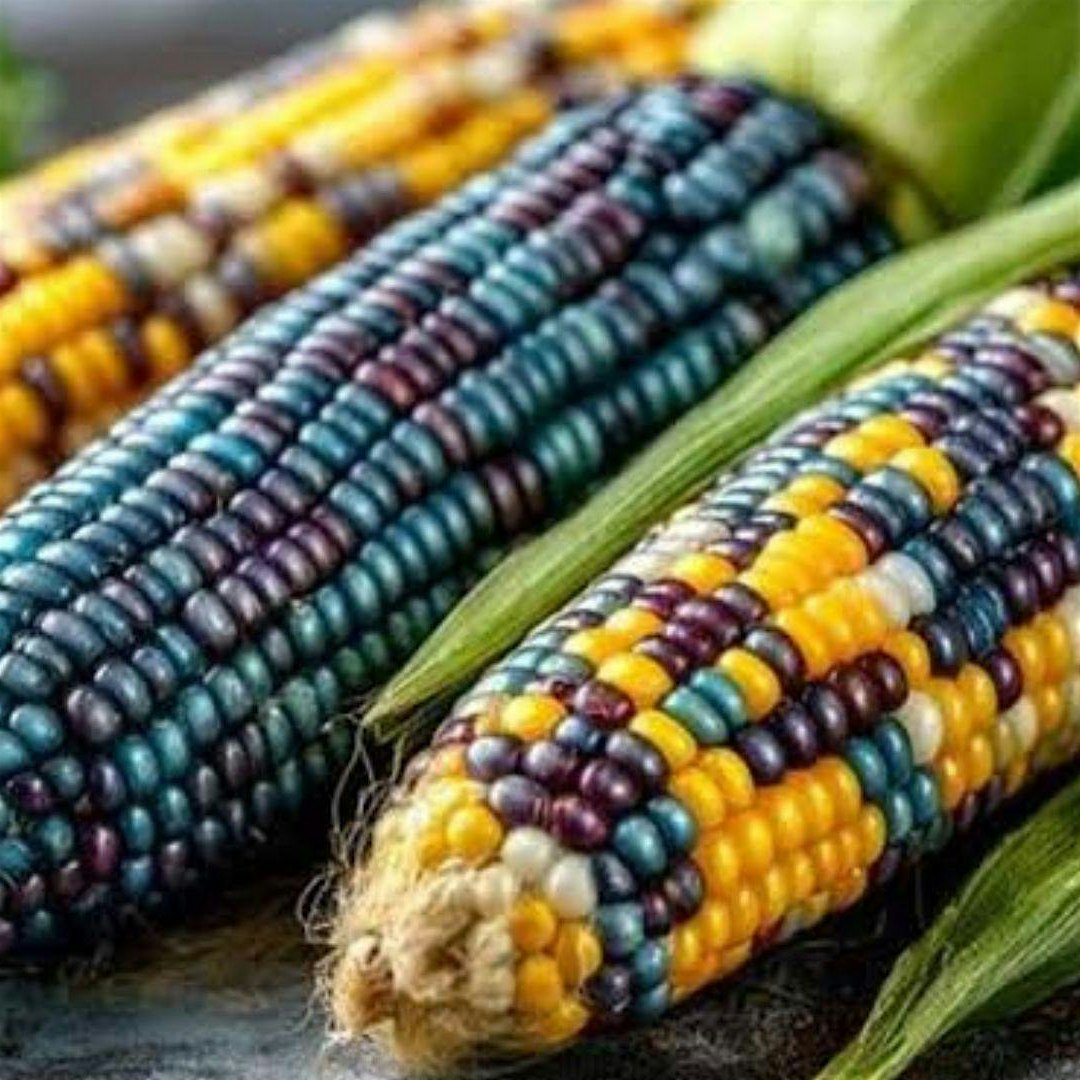
Inviting all maize / corn lovers!
Join us around the table and in the garden to spend time thinking about the cultural, spiritual and political significance of maize throughout the Americas. Together, look to the history and gather stories of when we first met this plant, recalling memories of tending in the garden or over a delicious meal. Together, we’ll tell our stories to undersand more deeply our relationship to the important foodway. We’ll end our storytelling session by making our own corn silk tea and sharing corn bread together, visiting the corn kin in our shared learning garden.

Your Facilitator: Jasmín Durán
Nestled in the intersections of decolonization, immigration, youth work, healing justice, land and herbalism, Jasmín’s work seeks to uplift, celebrate and preserve the legacy of ancestral healing, wisdom, and technologies in the diaspora. As a child of immigrants, Jasmín embodies a deep understanding of the challenges and joys of the migrant experience in the US.
Jasmín has a B.A. in International Relations & Food Studies from Syracuse University (2015). In 2020, she completed a Spiritual Herbalism Apprenticeship under the guidance of Master Herbalist Karen Rose at Sacred Vibes Apothecary in Brooklyn, NY. She has worked extensively at local community gardens and in organic farm projects abroad. As an educator, her work is participatory, culturally aware, youth centered and trauma informed. Today, she continues to support youth in NYC, working in an anti-violence organization where she co-creates brave spaces with young people to unpack, question, dream and decolonize.

“Another thing we lost is culture. . . look at the word agriculture. We lost that connection. And so now it’s going back to the culture of agriculture. Why do we grow the food that we do?” – Karen Washington
Why do we grow the foods we do? How is culture tied to our local foodways and agricultural systems? What stories of nourishment are you hungry to tell? What creative acts are you being called to digest? In this weekly series, explore various techniques and practices introduced by visiting artists who will lead us in expressing our relationship to food, agriculture, and the histories and stories that shape how we connect with our foodways.
Through various artmaking techniques like bookmaking, printmaking, collage, sculpture, natural-pigment making and painting, alternative photography processes, participants will create artwork that begins to answer the question: Where is the culture in our agricultural system?
This is a free drop-in program. Come to every class to build on your skill or come to one or two that you are available for. Explore your relationship to food and agriculture and the ways our food systems can connect us more deeply to our local ecosystems and communities.

Workshops are rain or shine.
Accessibility: Our kitchen/classroom space is wheelchair accessible. With prior planning, we can add a few small mats onto the pebbled ground of greenhouse to make a small wheel-chair accessible path. Our learning garden has grass paths, and the entrance is through a gate with a small, raised entrance. Our tables can be lowered/raised, and we have several backless benches or stools. Our kitchen is in regular use, and while we try to cook without peanuts, much of our cookware is shared and we cannot guarantee a nut-free environment. We have a first aid kit, and the closest AED is in another building several yards away. Drinking water is made available in refillable pitchers.
When inside the greenhouse and kitchen we will open our double-doors and windows to vent the space and encourage masking and social distancing when in more closed-in spaces.
Our closest bathrooms are a building away, about a one-minute walk. A gender neutral bathroom is also available, and this is accessible by key which you can request from staff. We are not a scent-free zone, and because herbalism classes take place here, cannot guarantee that the site will be clear of any essential oil smells. If you have needs not addressed here, please reach out to Mallory Craig at mcraig@thehort.org.